O Levels Biology (5090)•5090/11/M/J/20
Explanation
Malaria Control via Larval Elimination
Steps:
- Recall malaria transmission: Mosquitoes (Anopheles) breed in stagnant water, laying larvae that develop into adults carrying Plasmodium parasites.
- Identify control methods: Target breeding sites to reduce mosquito populations before they bite humans.
- Evaluate options: Match each to biological mechanism—larvicides disrupt larval respiration in water.
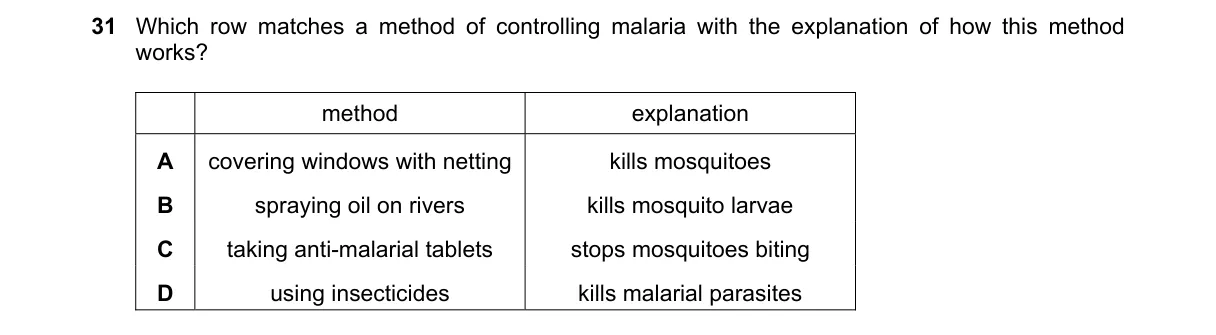
- Select match: Oil suffocates larvae by blocking air access on water surface.
Why B is correct:
- Oil forms a monolayer on water, preventing mosquito larvae from obtaining oxygen through their siphons, as per entomological larvicide principles.
Why the others are wrong:
- A: Nets physically block mosquito entry but do not kill them; they prevent bites.
- C: Anti-malaria tablets (prophylactics) inhibit parasite growth in humans, not mosquito behavior.
- D: Insecticides target adult mosquitoes or vectors, not the Plasmodium parasites inside them.
Final answer: B
Topic: Disease
Practice more O Levels Biology (5090) questions on mMCQ.me