O Levels Biology (5090)•5090/11/M/J/20
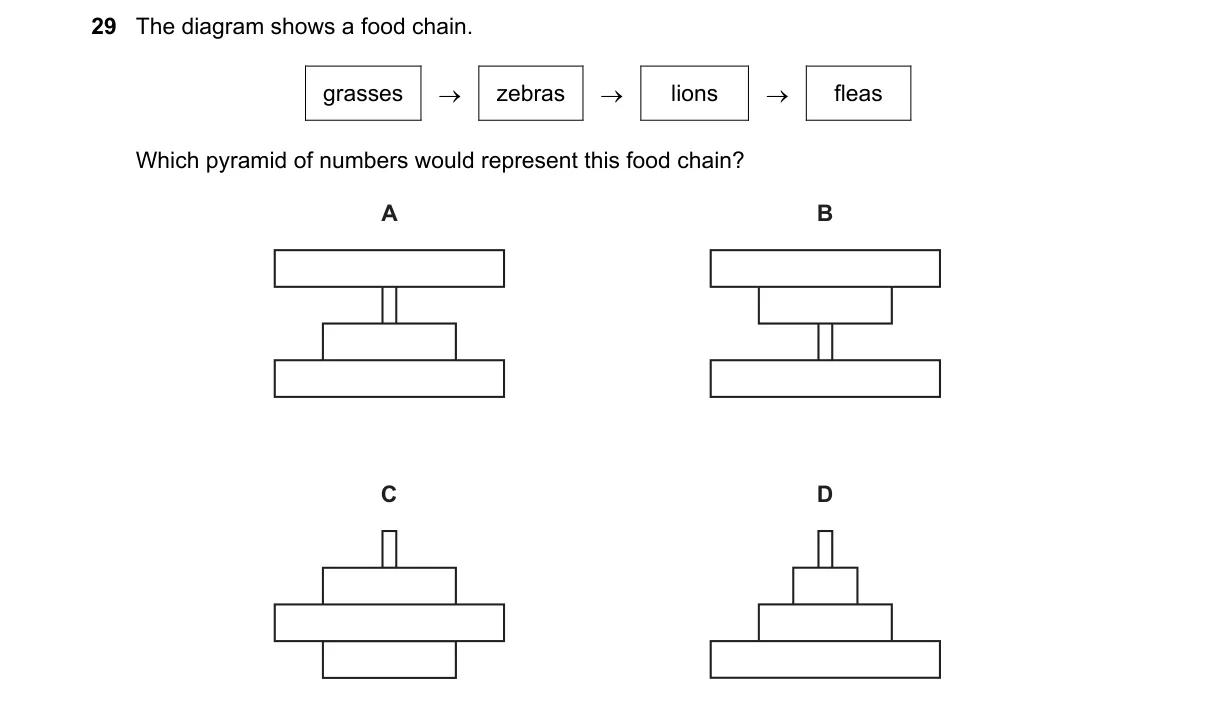
Explanation
Pyramid of numbers for a food chain with parasites
Steps:
- Identify trophic levels: grasses (producers), zebras (primary consumers), lions (secondary consumers), fleas (tertiary consumers/parasites on lions).
- Recall pyramid of numbers depicts relative population sizes, typically widest at producer base and narrowing upward due to energy loss.
- Analyze abundances: grasses most numerous, zebras fewer, lions scarcest among predators, but fleas multiply on few lions, exceeding lion numbers.
- Conclude pyramid inverts at top due to high parasite density per host.
Why A is correct:
- Option A shows an inverted pyramid, matching the definition where parasite populations (fleas) exceed host numbers (lions), defying typical energy transfer reduction.
Why the others are wrong:
- B: Upright pyramid assumes decreasing numbers upward, ignoring flea abundance.
- C: Spindle-shaped pyramid fits balanced ecosystems, not this parasite chain.
- D: Broad-top pyramid suits detritivores, not this linear predator-parasite sequence.
Final answer: A
Topic: Energy flow
Practice more O Levels Biology (5090) questions on mMCQ.me