O Levels Chemistry (5070)•5070/11/O/N/23
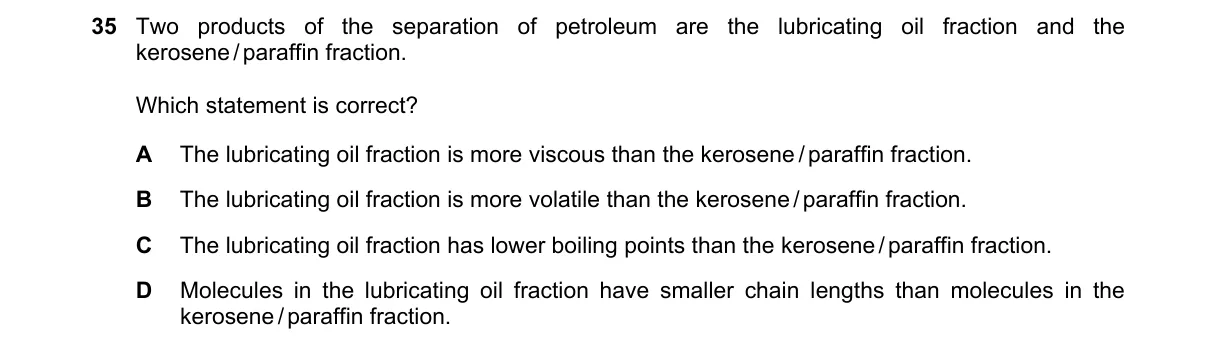
Explanation
Petroleum fractions differ by chain length, boiling point, and viscosity
Steps:
- Fractional distillation separates petroleum hydrocarbons by boiling point, with lower-boiling fractions at the top.
- Kerosene/paraffin fraction boils at 150–275°C, containing C9–C16 alkanes.
- Lubricating oil fraction boils above 300°C, containing longer C20+ alkanes.
- Longer alkane chains increase viscosity through stronger van der Waals forces and molecular entanglement.
Why A is correct:
- Hydrocarbons with longer chains exhibit higher viscosity due to increased intermolecular forces, as defined in organic chemistry properties of alkanes.
Why the others are wrong:
- B: Lubricating oil boils at higher temperatures (above 300°C) than kerosene (150–275°C).
- C: This statement is actually correct, as lubricating oil has higher boiling points than kerosene.
- D: Lubricating oil contains longer-chain molecules (C20+) than kerosene (C9–C16).
Final answer: A
Topic: Fuels
Practice more O Levels Chemistry (5070) questions on mMCQ.me