O Levels Chemistry (5070)•5070/12/O/N/19
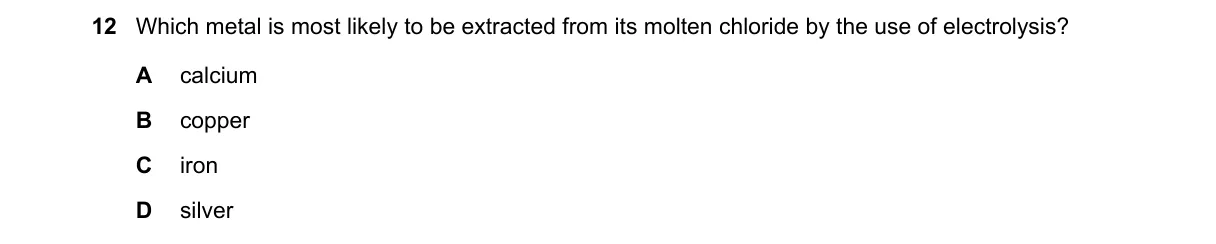
Explanation
Electrolysis extracts reactive metals from molten chlorides
Steps:
- Identify that electrolysis of molten metal chloride (e.g., MCl → M + Cl₂) produces the metal at the cathode.
- Note this method suits metals too reactive to reduce with carbon, per the reactivity series.
- Compare metals: Calcium is highly reactive (above Mg), while copper, iron, and silver are below.
- Conclude calcium requires electrolysis for extraction.
Why A is correct:
- Calcium, being highly reactive, is extracted by electrolyzing molten CaCl₂, as it cannot be reduced by carbon (reactivity series places it above carbon).
Why the others are wrong:
- B. Copper is extracted by roasting sulfide ores and self-reduction, not molten chloride electrolysis.
- C. Iron is reduced from oxide ores using carbon in a blast furnace.
- D. Silver is obtained by cyanide leaching and precipitation, not electrolysis of molten AgCl.
Final answer: A
Topic: Electrolysis
Practice more O Levels Chemistry (5070) questions on mMCQ.me