O Levels Chemistry (5070)•5070/11/M/J/18
Explanation
Matching Petroleum Fractions to Their Uses
Steps:
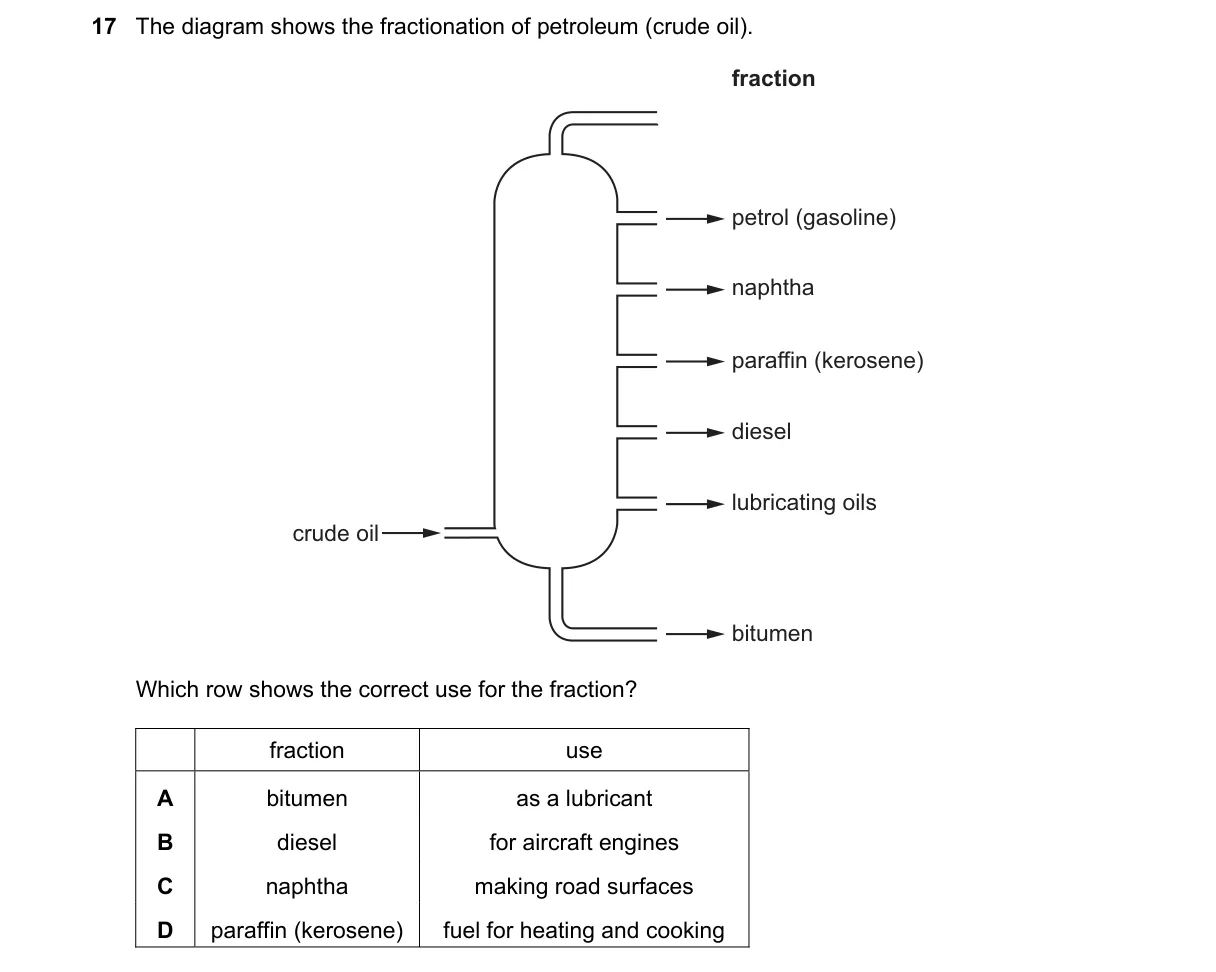
- Recall that petroleum fractionation separates crude oil into fractions by boiling point: gases, naphtha, kerosene, diesel, and bitumen from top to bottom.
- Identify each fraction's typical use based on molecular size and properties: lighter fractions for fuels, heavier for roads.
- Evaluate options by matching fraction names to standard applications in industry.
- Select the option where the fraction's use aligns with its real-world purpose.
Why D is correct:
- Paraffin (kerosene) is a middle distillate fraction used as a clean-burning fuel for heating and cooking, as defined in petroleum chemistry standards.
Why the others are wrong:
- A: Bitumen is a heavy residue for road surfacing, not engine fuel due to its high viscosity.
- B: Diesel powers trucks and ships, while aircraft engines use kerosene for its lower freezing point.
- C: Naphtha is a light fraction for petrochemicals like plastics, not road surfaces which require bitumen.
Final answer: D
Topic: Fuels
Practice more O Levels Chemistry (5070) questions on mMCQ.me