O Levels Physics (5054)•5054/11/O/N/22
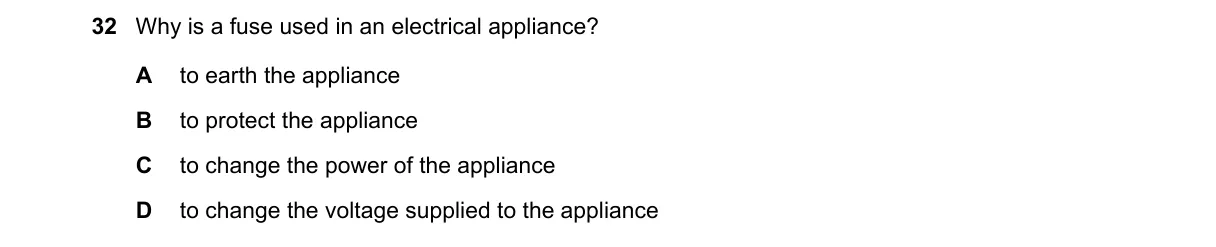
Explanation
Fuses prevent electrical overloads by breaking circuits
Steps:
- Identify the function of a fuse: it contains a thin wire that melts under excessive current.
- Understand overload risks: high current can overheat and damage appliance components or cause fires.
- Recognize protection mechanism: melting wire interrupts the circuit, stopping current flow.
- Confirm purpose: this safeguards the appliance without altering power or voltage.
Why B is correct:
- A fuse protects the appliance by melting its wire when current exceeds the rated value, breaking the circuit per Ohm's law (I = V/R) to prevent overheating and damage.
Why the others are wrong:
- A: Earthing grounds excess charge to prevent shocks, not the fuse's role.
- C: Fuses do not adjust power output; they only interrupt flow during faults.
- D: Voltage regulation uses transformers, not fuses, which maintain supplied voltage until they blow.
Final answer: B
Topic: Electrical safety
Practice more O Levels Physics (5054) questions on mMCQ.me